


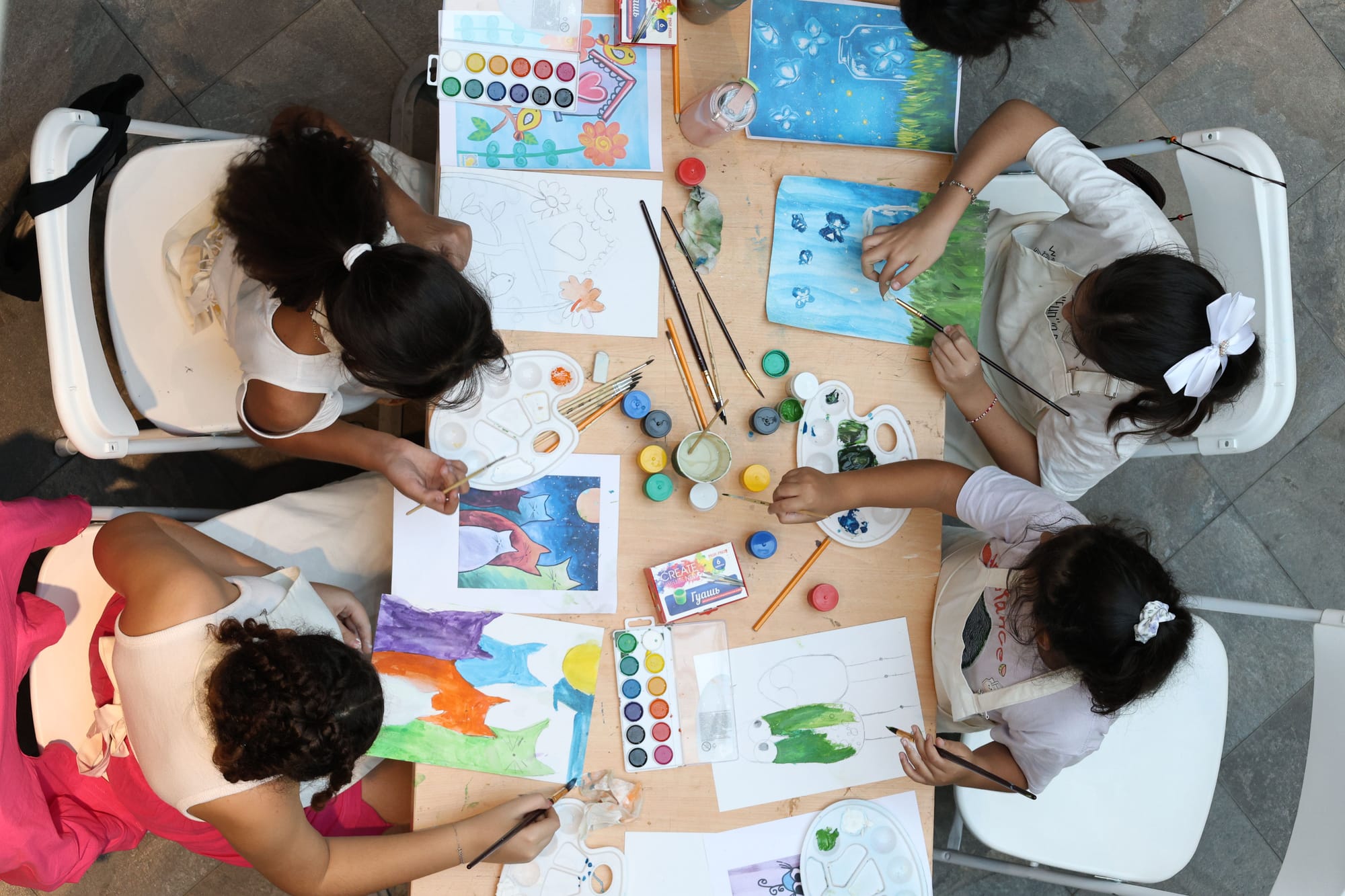
You don’t need fancy supplies or a big cleanup to give kids a great art day. The best art activities for kids use paper, crayons, and things you already have at home or in the classroom, and they build confidence and creativity every time a child finishes something they made themselves.
Art time pays off beyond the art itself, too. In a large study of more than 10,000 Houston elementary students, kids at schools that added more arts experiences had fewer discipline problems, scored higher in writing, and showed more compassion for others.
This guide covers kid-friendly art activities for home and the classroom, from watercolor art to online coloring pages and free printable worksheets, each with simple steps, materials, and pros and cons. The table makes it easy to sort them by age, mess level, and the skill each one builds.
Key takeaways
- The best art activities for toddlers and preschoolers are stamp painting, play dough sculptures, and squish painting, which focus on squishing, stamping, and exploring color.
- School-age kids are ready for skill-building projects like step-by-step draw-alongs, paper weaving, watercolor galaxies, and symmetry painting.
- Draw-alongs, roll-a-drawing, pass-the-drawing, and digital drawing are nearly mess-free, so they work well for busy classrooms and quick breaks.
- Many activities teach specific skills: Shadow tracing connects art to science, self-portrait collages support social-emotional learning, and paper weaving builds fine motor control.
- A free, ad-free digital option like Aqua by Adobe fits in when you want no-mess art time, an indoor recess activity, or a way to save and display kids’ paper drawings.
Best art activities for kids
Each activity below includes what it is, how to do it, the skill it builds, and what it costs. Use the quick-reference table to find the right fit by age and mess level. Most activities work with a whole class, and many tie into lessons you’re already teaching, from math to science.
1. Digital drawing and coloring in Aqua: Best for safe, ad-free digital art and skill-building at home or in class
Aqua by Adobe is a free art app for kids, made by parents at Adobe. Students can draw, color, trace, design outfits, and play pass-and-play art games, then display their paper and digital work together in their own museum gallery. It’s free, with no ads and no upsells, and it fits easily into lessons across subjects, from illustrating new vocabulary words to drawing an animal’s life cycle.
Aqua’s new Art & Seek feature turns art lessons into a game kids play together. They can explore color theory by blending and mixing colors, build digital design skills with the eyedropper (a tool real artists and designers use), and discover famous artworks from around the world through creative play.
- What you do: Open Aqua in a browser to start drawing online with no login, or download the free app on iPad, iPhone, or Android. Pick a blank canvas, a coloring page, or a drawing lesson. On screen-free days, print a teacher coloring sheet or pull from these worksheets for teachers, then scan students’ finished paper work into the app to save it.
- Skill it builds: Drawing fundamentals, color choices, creative confidence, and cross-curricular connections.
- Materials: A tablet or computer.
- Cost: Free.
- Classroom tip: Set Aqua up as a station during centers or indoor recess, and use pass-and-play games so partners can share one tablet.
Pros:
- Completely free, with no ads and no upsells
- No-mess art that works at home, in the car, or in class
- Kids can save and show off paper and digital art in one museum
- Pass-and-play games turn art into a group activity
2. Step-by-step draw-along: Best for confidence-building in hesitant young artists
A draw-along breaks a picture into small steps that kids copy one at a time, so even hesitant artists finish with a drawing they’re proud of.
- What you do: Pick a simple subject, like a cat or a rocket. Draw one step at a time on a whiteboard or follow a video, and pause while kids copy each step.
- Skill it builds: Following directions, breaking shapes into parts, and confidence.
- Materials: Paper, pencil, and crayons.
- Cost: Free to $5.
- Classroom tip: Use a document camera or whiteboard so the whole class can follow along, and pick subjects from your current unit, like a planet during a space lesson.
Pros:
- Gives nervous artists an easy win
- Works with a whole class at once
Cons:
- Less room for open-ended creativity
- Fast finishers may need an extension task
3. Roll-a-drawing: Best for sparking imagination through chance
Kids roll a die to choose each part of a silly creature, like its eyes, legs, and body. Every roll leads to a surprise, so no two drawings look the same.
- What you do: Make a chart with six options for each body part. Kids roll once per part and draw what they land on.
- Skill it builds: Imagination, flexible thinking, and number recognition.
- Materials: Paper, pencils, and a die.
- Cost: Free to $5.
- Classroom tip: Theme the chart to a unit, like insects or community helpers, then have students write a sentence about their creature for a quick writing tie-in.
Pros:
- Takes the pressure off deciding what to draw
- Easy to theme for holidays or lessons
Cons:
- Needs a prepared chart
- Younger kids may need help reading the options
4. Pass-the-drawing (exquisite corpse): Best for group and classroom collaboration
In this classic art game, each player draws one section of a figure, folds the paper to hide it, and passes it on. The unfolded result is always funny.
- What you do: Fold paper into three sections. One person draws a head, the next a body, and the last the legs, without peeking at the rest.
- Skill it builds: Collaboration, turn-taking, and imagination.
- Materials: Paper and markers.
- Cost: Free to $10. For a no-paper version, try these drawing games for kids.
- Classroom tip: Pass papers within table groups and set a timer for each section to keep rounds moving.
Pros:
- Gets groups laughing and working together
- Works for any age and skill level
Cons:
- Needs at least two or three players
- Some kids want to see the whole picture as they go
5. Shadow tracing art: Best for connecting art with science
Kids line up toys in the sun and trace their shadows on paper, then color them in. When they trace again an hour later, the shadows have moved and changed length, which shows kids how the sun’s position in the sky shifts during the day.
- What you do: Set toys on paper in direct sunlight, trace the shadows, and come back an hour later to see how they moved.
- Skill it builds: Observation, tracing, and early science concepts like light and shadow.
- Materials: Paper, pencils, small toys, and sunshine.
- Cost: Free to $5.
- Classroom tip: Trace the same shadows in the morning and again after lunch to show how the sun’s position changes during the school day.
Pros:
- Turns a science lesson into art
- Uses toys you already have
Cons:
- Needs a sunny day or a strong flashlight
- Shadows shift as kids trace
6. Watercolor galaxy art: Best for color-mixing and texture practice
Kids blend dark blues, purples, and pinks with watercolors, then flick white paint on top for stars. The colors run together into a dreamy space scene.
- What you do: Wet the paper, drop in watercolor, and let the colors mix. Once dry, splatter white paint with an old toothbrush.
- Skill it builds: Color mixing, blending, and brush control.
- Materials: Watercolors, thick paper, and a brush.
- Cost: About $5 to $10 for supplies.
- Classroom tip: Pair it with a space or solar system unit, and clear a counter or drying rack before you start.
Pros:
- Every painting turns out beautiful
- Teaches how colors blend
Cons:
- Wet paint takes time to dry
- Splatter can get messy
7. Squish (symmetry) painting: Best for teaching symmetry
Kids paint blobs on one side of a folded paper, squish it shut, and open it to find a perfect mirror image, often creating images that look like butterflies or bugs.
- What you do: Fold paper in half, add paint to one side, press the halves together, and peel them open.
- Skill it builds: Understanding symmetry and predicting outcomes.
- Materials: Paper and tempera paint.
- Cost: About $5.
- Classroom tip: Use it in a math lesson on symmetry, then have students look for symmetry in insects, leaves, and letters.
Pros:
- A fun surprise every time
- Easy for all ages
Cons:
- Paint can squeeze out the edges
- Needs drying time
8. Blow painting with straws: Best for abstract, process-focused fun
Kids drop watery paint on paper and blow through a straw to push it into wild, branching shapes. It’s pure process art, with no right or wrong result.
- What you do: Thin paint with water, add drops to paper, and blow through a straw to spread them. Add faces or details once it dries.
- Skill it builds: Breath control, cause and effect, and creative thinking.
- Materials: Paint, straws, and paper.
- Cost: About $5.
- Classroom tip: Give each student their own straw, and remind them to pause between breaths.
Pros:
- Exciting and easy for little kids
- Focuses on the process, not the result
Cons:
- Kids may get light-headed if they blow too long
- Watery paint can spill
9. Stamp painting: Best for pattern-making with toddlers
Toddlers dip sponges, corks, or sliced veggies in paint and stamp them onto paper to make bold patterns.
- What you do: Pour paint onto plates, offer a few stampers, and let kids press shapes onto paper in rows or patterns.
- Skill it builds: Pattern-making, grip strength, and color recognition.
- Materials: Washable paint, paper, and household stampers.
- Cost: Free to $5.
- Classroom tip: Run stamping as a small-group center, and use it to practice AB and ABB patterns in math.
Pros:
- Easy for toddlers to do on their own
- Uses items you already have
Cons:
- Little hands get covered in paint
- Best on a covered table
10. Nature collage: Best for outdoor learning and seasonal lessons
Kids gather leaves, petals, and twigs on a walk, then glue them into a picture or pattern. It’s perfect to pair with lessons about the seasons.
- What you do: Take a nature walk with a bag, then arrange and glue finds onto cardboard. Pair it with these nature coloring pages on rainy days.
- Skill it builds: Observation, sorting, and composition.
- Materials: Glue, cardboard, and natural materials.
- Cost: Free to $5.
- Classroom tip: Turn the walk into a scavenger hunt, like finding three different leaf shapes, to kick off a seasons or habitats unit.
Pros:
- Gets kids outside
- Changes with every season
Cons:
- Some materials crumble as they dry
- Depends on what you can find outdoors
11. Self-portrait collage: Best for social-emotional learning
Kids build a portrait of themselves from magazine cutouts, fabric, and drawings, adding things they love around the edges.
- What you do: Start with a face outline, then fill it in with cut paper and add words or pictures about favorite things and feelings.
- Skill it builds: Self-awareness and expressing feelings. See more social emotional learning activities.
- Materials: Magazines, scissors, glue, and paper.
- Cost: Free to $10.
- Classroom tip: Display finished portraits on an “All About Us” bulletin board during the first weeks of school.
Pros:
- Great for the first week of school
- Opens up conversations about feelings
Cons:
- Takes longer than most projects
- Requires safe scissor use
12. Paper weaving: Best for fine-motor practice
Kids weave paper strips over and under slits in a paper loom to create a colorful, checkered mat.
- What you do: Cut slits in a folded sheet, leaving a border, then weave contrasting strips through in an over-under pattern.
- Skill it builds: Fine motor control, patterns, and focus.
- Materials: Construction paper and scissors.
- Cost: Free to $10.
- Classroom tip: Pre-cut the looms and strips before class, and use the over-under pattern to reinforce AB patterns.
Pros:
- Builds hand strength and coordination
- Uses only paper
Cons:
- Prep takes a few minutes
- Can frustrate kids who lose the pattern
13. Play dough sculptures: Best for open-ended preschool play
Preschoolers roll, squish, and shape play dough into animals, food, or anything they imagine.
- What you do: Offer dough with simple tools like rolling pins, plastic knives, and cookie cutters, and let kids build freely.
- Skill it builds: Hand strength, 3D thinking, and pretend play.
- Materials: Store-bought or homemade dough.
- Cost: Free to $5.
- Classroom tip: Have students shape letters, numbers, or 2D shapes during literacy or math centers.
Pros:
- Open-ended and endlessly reusable
- Strengthens little hands
Cons:
- Dough can dry out if not stored
- Bits end up on the floor
14. Recycled junk sculptures: Best for sustainability lessons
Kids turn boxes, tubes, and bottle caps into robots, castles, or cities. It’s a natural tie-in to lessons on recycling.
- What you do: Collect clean recyclables, then tape and glue them into a sculpture. Paint it once it holds together.
- Skill it builds: Engineering, problem-solving, and sustainability awareness.
- Materials: Recyclables, tape, and glue.
- Cost: Free to $5.
- Classroom tip: Ask families to send in clean recyclables a week ahead, and tie the project to Earth Day or a recycling unit.
Pros:
- Uses materials headed for the bin
- Encourages building and planning
Cons:
- Takes up storage space
- Needs a lot of tape
15. Sidewalk chalk murals: Best for big, mess-outside creativity
Kids team up to cover a driveway or playground with a giant chalk picture, keeping the mess outside and getting them some essential time in the sunshine.
- What you do: Pick a theme, sketch outlines, and fill in big areas of color together.
- Skill it builds: Large-motor movement, teamwork, and planning big compositions.
- Materials: Sidewalk chalk.
- Cost: About $5.
- Classroom tip: Save it for recess or field day, and give each group its own section of blacktop and a shared theme.
Pros:
- No cleanup indoors
- Great for big groups
Cons:
- Depends on the weather
- Washes away with the rain
How to choose the right art activity for your child
The right art activity for kids depends on their age, attention span, how much class time you have, and how much mess you can handle that day. Start with these considerations:
- Age: Toddlers and preschoolers do best with big, sensory activities like stamp painting and play dough. Kids ages 5 to 8 enjoy draw-alongs, roll-a-drawing, and symmetry painting. Older kids are ready for paper weaving, self-portrait collages, and junk sculptures.
- Attention span: For short bursts, try a draw-along or roll-a-drawing. For a longer afternoon, pick a project with several steps, like a watercolor galaxy or recycled sculpture.
- Mess tolerance: Drawing, pass-the-drawing, and digital art are nearly mess-free. Save blow painting, squish painting, and stamping for when you have a covered table or outdoor access.
- The skill you want to build: Choose paper weaving or play dough for fine motor practice, shadow tracing for science, and self-portraits for social-emotional learning.
- Class size and time: For a whole class in a short block, pick low-prep activities with no drying time, like draw-alongs, pass-the-drawing, or printable coloring sheets. Save paint and collage projects for a longer art block or a day with extra hands.
A few habits make art time easier for everyone:
- Set up an art corner: A small table with a washable cover makes activity supervision and classroom cleanup easier.
- Celebrate the process: Ask kids to tell you about their art instead of saying what it looks like. It keeps the focus on effort and ideas, not perfection.
- Display their work: Hang art on the fridge or a classroom wall, or save it digitally so you can keep every piece without the piles.
- Plan for early finishers: Keep a stack of printable coloring sheets or drawing prompts (plus a bin of crayons, glue sticks, and scraps) on hand so students who finish early have something to move on to.
Build creativity with art activities for kids
The easiest way to build your students’ creativity is to pick one of these art activities for kids and try it this week. Start with something simple, like a draw-along or stamp painting, and add bigger projects as their confidence grows.
Mix hands-on and digital art so kids get the best of both. Aqua by Adobe is free, with no ads and no upsells, and it’s made for families and classrooms. Kids can draw, color, and play art games, then bring their paper art into the app and show it off in their own museum. Plus, teachers can find printable worksheets, coloring pages, and classroom activity ideas.
Art activities for kids FAQs
What are some fun and engaging art projects for kids that take only 10 minutes?
Quick art projects include a draw-along, roll-a-drawing, a symmetry squish painting, a doodle page, or a printable coloring page. Each one needs only paper and crayons or paint and wraps up in about 10 minutes. They also fit into transitions, indoor recess, or the last few minutes of class.
What are some easy art activities for students?
Easy art activities for students include pass-the-drawing, paper weaving, nature collages, and teacher coloring sheets. They use simple supplies, work for a whole class, and can connect to lessons in science, reading, or social studies.
What are the different types of art activities?
The main types are drawing, painting, collage, sculpture, printmaking (like stamping), and digital art. Mixing several types helps kids try new materials, build different skills, and find what they enjoy most.
What art activities help kids who struggle to focus?
Short, structured activities work best, like step-by-step draw-alongs, paper weaving, and color by number. Hands-on, sensory projects like play dough or stamp painting also help kids stay engaged because they keep their hands busy.
What's a good screen-based art activity that's safe for kids?
Look for an art app made for kids, with no ads, no in-app purchases, and no chat with strangers. Aqua by Adobe is free with no ads and no upsells. Kids can draw, color, trace, and play art games, and they can start in a browser with no login.